Explaining Why Minority Births Now Outnumber White Births
by Jeffrey Passel, Gretchen Livingston and D’Vera Cohn
The nation’s racial and ethnic minority groups—especially Hispanics—are growing more rapidly than the non-Hispanic white population, fueled by both immigration and births. This trend has been taking place for decades, and one result is the Census Bureau’s announcement today that non-Hispanic whites now account for a minority of births in the U.S. for the first time.
The bureau reported that minorities—defined as anyone who is not a single-race non-Hispanic white—made up 50.4% of the nation’s population younger than age 1 on July 1, 2011. Members of minority groups account for 49.7% of children
younger than age 5, the bureau said, and for 36.6% of the total population. The findings are included in the bureau’s first set of national population estimates since the 2010 Census, when 49.5% of babies under age 1 were minorities.
Hispanics are more than a quarter of the nation’s youngest residents, according to the new population estimates, accounting for 26.3% of the population younger than age 1. Among other major non-Hispanic groups, the share for whites is 49.6%; for blacks, 13.7%; and for Asians 4.4%.
The long-term result of these changes among younger age groups is that non-Hispanic whites are projected to become a minority of the population (47%) by 2050, according to Pew Research Center population projections. (Census Bureau projections say the change will occur in 2042). Hispanics, already the nation’s largest minority group, are projected to continue to account for most population growth by that year.
Population Patterns
Underlying these changes is the rapid growth of minority groups compared with non-Hispanic whites. Results from the 2010 Census showed that racial… Continue reading
Turkey’s Middle East Policy of Seeking To Gobble, Gobble Up the Middle East Makes Enemies of Everyone
May 16, 2012 | By Barry Rubin
“Countries may vary, but civilization is one, and for a nation to progress, it must take part in this one civilization. The decline of the Ottomans began when, proud of their triumphs over the West, they cut their ties with the European nations. This was a mistake which we will not repeat.” — Kemal Ataturk, 1924
Spinning in his grave, indeed, for now his successors not only think they can revive a Turkish-ruled imperium, but have made the very mistake of turning their backs on the West, which the republic’s founder rightly saw as the downfall of that earlier incarnation of his country. I’d change Ataturk’s wording slightly: the Ottomans turned their backs on the modern world then being developed in the West while still forming alliances with European powers.
Once upon a time there was a country named Turkey whose republic was created by Kemal Ataturk, who famously said: “Peace at home; peace abroad.”
He and the Turkish people had seen their Ottoman Empire collapse after failing to modernize, engaging in chauvinistic nationalism (under the Young Turks), and entering an unnecessary war that led to 20 percent of its population dead and the country prostrate.
And so Ataturk and his colleagues saved the country based on two basic principles: at home, joining Western civilization through modernization and secularization; abroad, avoiding foreign ambitions and conflicts. Whatever their faults, they did a remarkable job. Turkey made steady progress far in excess of what happened in Iran or the Arabic-speaking world.
But then came the regime of the Justice… Continue reading
Interviewee: Stephen J. Hadley, United States Institute of Peace
Interviewer: Toni Johnson, Senior Editor/Senior Staff Writer
May 8, 2012
Longstanding U.S. ties with Turkey, which have stressed security and strategic arrangements, have the potential to develop into a robust economic and diplomatic partnership, especially in the Middle East and Central Asia, according to a new CFR Task Force report on U.S.-Turkey relations. Turkey’s dramatic changes in the last decade make it ripe for a stronger collaboration with the United States, but the terms of the relationship need to be changed, says Stephen Hadley, co-chair of the report and a former U.S. national security adviser. “We have to really meet as equals. We have to respect each other’s national interests,” he says. “We need to be very transparent with one another. We need to have a sort of ‘no surprises’ rule in our foreign policy.” Hadley says while the report lauds Turkey’s gains, it also is frank about its democratic challenges.
What are the big takeaways from the Task Force report?
The first is that Turkey has changed dramatically over the last ten years. It’s really a new Turkey, and we need to see and think about it differently as a consequence. Secondly, that means there needs to be a new relationship between the United States and Turkey. Three, Turkey and the United States working together can do some very important things, particularly in that region of the world–that is, the Middle East and Northwest Asia, and the Central Asia area.
And lastly, Turkey has a lot of choices it will make and has to make if it goes forward in terms of both deepening its democracy and expanding and… Continue reading
Was Industrial Sabotage at Play with Super Jet crash in Indonesia?
Wayne MADSEN | 12.05.2012
Based on past aggressive competitive commercial tactics employed by the alliance of American corporations, the U.S. Intelligence Community, and the Pentagon, aviation experts in Asia are wondering aloud whether the recent crash of the new Sukhoi Super Jet 100 in Indonesia was the result of high-stakes industrial sabotage engineered to protect Boeing’s lucrative commercial and military aviation market in Asia at the expense of a resurgent Russian aviation industry…
The Sukhoi passenger plane was carrying prospective Indonesian customers, as well as journalists and employees of the Sukhoi company, when it crashed into the summit of Mount Salak, near Jakarta. Of the some 50 passengers and crew, there were no survivors of the crash. A reliable Indonesian journalist has confided that the only copy of the passenger manifest was on board the aircraft when it crashed. Other than the Sukhoi crew and officials on board, there were a number of representatives of Indonesian airlines, as well as local journalists, as well as nationals of France, Italy, and the United States.
After 21 minutes into the demonstration flight, the pilot requested air traffic control permission to drop from 10,000 to 6,000 feet. Although there was light rain, weather conditions were not hazardous. The reason for the pilot’s request to descend is not known. Shortly after the plane descended, air traffic control lost contact with the plane. Ground observers reported that the plane appeared “unsteady” before the crash. The plane did not take off from Sukarno-Hatta International Airport but from another local airfield, the Halim Perdanakusuma Airport, which is shared with the Indonesian Air Force’s Halim Air Force Base.
Halim… Continue reading
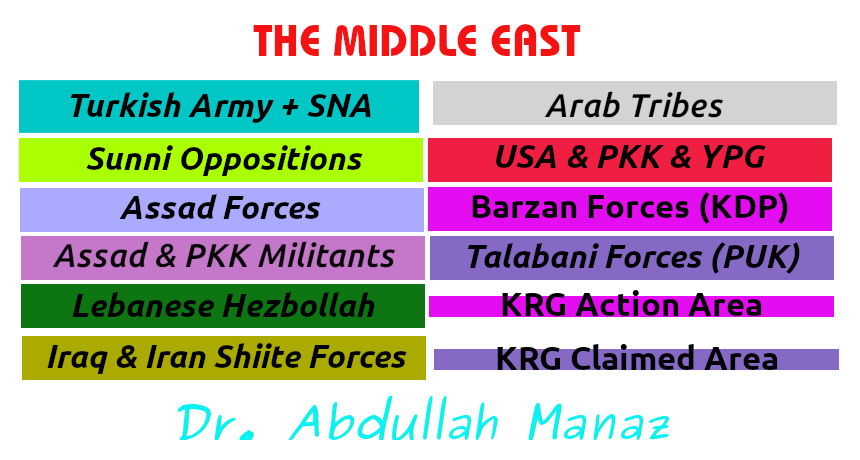
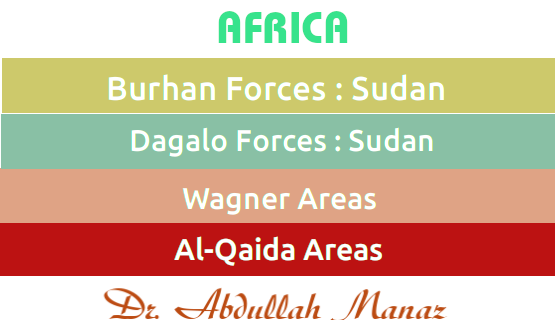
The World balances and its policy changing after September 11 also have altered significantly Turkiye and the Middle East in ten years. İn the current situation, we can sort the most basic features of Turkiye and the Middle East.
◊ United Stated and NATO are planning to build a new Light Green Belt in the Greater Middle East. On the basis of this generation, There are National Vision Movement (Milli Gorus, from Turkey) and its international ally Muslim Brotherhood Movement.
◊ The average age of those who lead this generation is over 50. They lived during September 12 in Turkey and Iran’s Islam Revolution and Afghanistan invasion in the World. U.S. and NATO supported significantly them against to İran in the Gulf and to Russia in the Central Asia and Afghanistan.
◊ The Islamic leaders who are affected from Iran’s Islamic Revolution and disregard the sectarian division as a teenager chose to become more pragmatic and (not moderate) a more political act for achieve the their goal with increasing age. Their most important preferences were to establish good relations with the United States and to support by U.S.
◊ Morocco: The most powerful organization was The Movement for Unity and Reform (Hareketu’t Tawhid wa al Islah) founded in 1996. In 1998, the name of its political movement was changed as The Justice and Development Party (Hizbu’l Adale wa et Tenmiya). Previously its leader was Saadeddin Othmani but Abdullah bin Kiran elected of the party in 2008. It won 117 seats of 395 in the November 2011 parliamentary election. Kiran was appointed Prime Minister. The symbol of the party is Gas Lamp.
◊ Tunisia: The Most powerful representative of… Continue reading


Hirsh’s main point is a partisan political characterization This’s how things work now. You cast the person in a political category your readers detest, signaling the readers that they should ignore the substance of what that person says. Thus, Hirsh begins:
This article was published in a very different form in the Jerusalem Post.
This would not be such a bad thing if we were talking about the “old” Turkey, the secular republic. Unfortunately, 
As November’s U.S. presidential election approaches, foreign policy and national security issues are rising in importance.